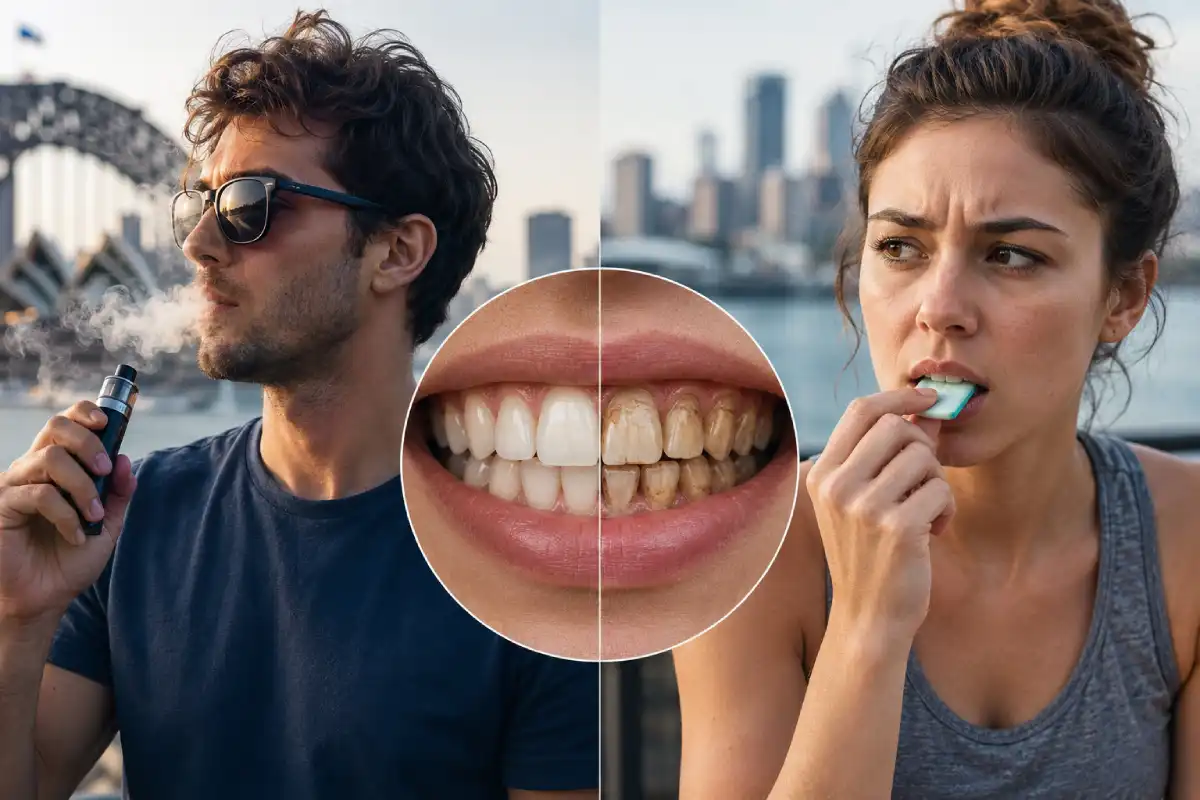

Life in Sydney moves fast. Between busy work schedules, hectic commutes, and the endless hustle, finding small ways to manage daily stress is essential. For many, quick coping mechanisms like picking up an e-cigarette or continuously popping sugar-free gum become second nature. They feel harmless: vaping seems cleaner than traditional smoking, and sugar-free gum is widely praised for freshening breath. However, these go-to stress outlets may be silently wreaking havoc on your teeth and jaw.
The Vaping Trap: Dry Mouth and Hidden Decay
While many view vaping as a modern alternative to cigarettes, e-cigarettes pose a unique threat to oral health. The primary issue stems from aerosolized propellants like propylene glycol and vegetable glycerin. When inhaled, these compounds draw moisture directly out of your mouth, leading to chronic dry mouth (xerostomia).
Saliva is your mouth’s natural defense mechanism; it washes away food particles, neutralizes harmful acids, and remineralizes enamel. Without adequate saliva, your mouth transforms into an ideal breeding ground for decay-causing bacteria to grow, thereby increasing the risk of getting tooth decay
Beyond dry mouth, the chemical additives and flavorings in vape liquids can inflame delicate gum tissue, increasing the risk of gum disease, recession, and persistent bad breath: even if you brush regularly.
Continuous Gum Chewing: The Overworked Jaw
On the flip side, reaching for a pack of sugar-free gum feels like the responsible choice. While chewing a piece of sugar-free chewing gum after a meal for 10 or 15 minutes helps stimulate saliva, non-stop, habitual chewing for hours to relieve stress creates a completely different problem.
Your temporomandibular joint (TMJ) connects your jawbone to your skull, supported by a complex network of muscles. Continuous chewing forces these muscles to work non-stop, leading to muscle fatigue, chronic headaches, and painful TMJ disorders.
Furthermore, constant grinding motion accelerates wear on your tooth enamel, leaving your teeth more vulnerable to sensitivity and micro-cracks.
This habitual jaw tension often spills over into nighttime teeth grinding (bruxism), compounding the damage while you sleep.
Protecting Your Smile
Managing stress shouldn’t come at the expense of your oral health. To safeguard your smile, consider these healthier alternatives:
- Hydrate Constantly: Drink plenty of water throughout the day to combat dry mouth, especially if you vape or work in air-conditioned environments.
- Limit Gum Sessions: Cap your gum chewing to 10–15 minutes after meals rather than using it as a continuous nervous habit.
- Switch Stress Outlets: Try brief breathing exercises, stress balls, or short walks to release tension without putting strain on your jaw.
Recognising these hidden habits is the first step toward preserving a healthy, functional smile.
If you are experiencing jaw pain, tooth sensitivity, or dry mouth, schedule a check-up with the gentle team at Gentle and Caring Dentistry for reliable, affordable care in Maroubra. Our experienced team offers transparent pricing and tailored treatment plans to keep your smile looking and feeling its absolute best.