
It happens in a split second. A fast-moving cricket ball, a slip on the poolside tiles, or a tumble during a Saturday morning footy match: suddenly, you’re holding your tooth in your hand. In the dental world, we call this an “avulsed tooth,” and it is one of the few true dental emergencies where every second counts.
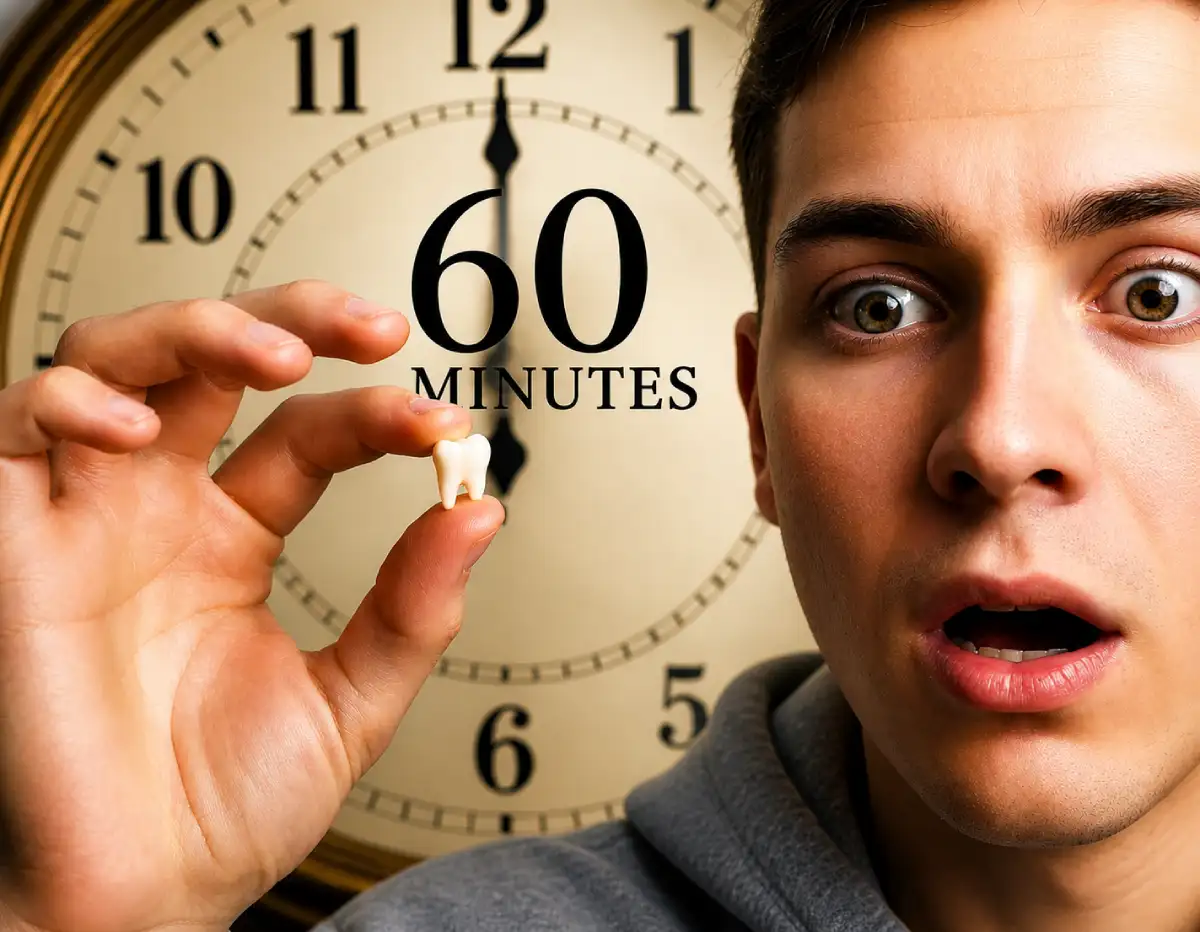
Biological research shows that if a permanent tooth is replanted within 60 minutes, it has a significantly higher chance of surviving for a lifetime. Miss that window, and the delicate cells on the root begin to die.
Here’s what you should follow in those 60 minutes
Step 1: The Retrieval (Handle with Care)
When you find the tooth, the most important rule is: Touch only the crown. The crown is the white, chewing part of the tooth.
Avoid touching the root (the pointed, yellow part) at all costs. The root is covered in tiny “periodontal ligament” cells that act like living glue to help the tooth reattach to your jaw. If you touch, scrub, or scrape the root, you kill these cells, making it nearly impossible for the tooth to take hold again.
Step 2: The Rinse (No Chemicals!)
If the tooth is dirty, you need to clean it gently. However, don’t reach for the soap or any household cleaners.
DO: Rinse it quickly (for no more than 10 seconds) under cold milk or your own saliva.
DON’T: Use tap water if milk is available. The chlorine in tap water can actually damage the root cells.
DON’T: Scrub the tooth with a brush or a cloth. This will “peel” away the vital reattachment cells.
Step 3: The Storage (Keep It Alive)
The tooth must stay moist. A dry tooth is a dead tooth.
- Try to Reinsert It: For adults, the best place for a knocked-out tooth is back in its socket. Gently place it back in the hole, and bite down softly on a clean cloth to hold it in place.
- The Milk Method: If you can’t get it back in, place the tooth in a small container of cold, whole milk.
- The Saliva Method: If there’s no milk nearby, keep the tooth tucked inside your cheek (be careful not to swallow it!).
Note for Parents: If a baby tooth is knocked out, DO NOT try to put it back in. Doing so can damage the permanent adult tooth growing underneath it. Still, bring your child to the dentist immediately to ensure no fragments are left behind.
Step 4: The 60-Minute Dash
Once the tooth is safe in milk or back in the socket, your next destination is the dental chair. The 60-minute window is the “golden hour” of dental trauma. Within this timeframe, a dentist can professionally splint the tooth to the adjacent teeth, allowing the ligaments to heal and the blood supply to stabilise potentially.
Why Timing is Everything?
Waiting even two hours can be the difference between keeping your natural tooth and needing a dental implant or bridge. When the tooth is out of the mouth, the cells on the root are “starving.” Replanting them quickly allows them to reconnect with the body’s blood supply.
At Gentle and Caring Dentistry, we understand that accidents don’t keep business hours. We prioritise emergency cases like a knocked-out tooth because we know that quick action saves smiles. If you or a loved one experiences a dental injury in Maroubra, don’t panic—just follow these steps and get to us as fast as you can.Has this happened to you? Keep our number in your phone just in case. You can reach the team at Gentle and Caring Dentistry or call us on (02) 9349 6668 for immediate emergency advice, or book the earliest appointment on our website.